After a road accident, fall, workplace injury, or other significant trauma, deciding where to seek treatment can be difficult. Some injuries are immediately visible, while internal injuries may initially produce fewer obvious signs. When families are considering a Trauma Care Hospital in Manjari, the priority should be timely assessment of the whole patient rather than focusing only on the most painful injury.
Trauma care involves identifying potentially serious injuries, stabilising the patient, and determining which investigations or specialist interventions are required.
Do Not Judge an Injury Only by Appearance
A person may have relatively minor external wounds while still having a significant internal injury.
Following substantial trauma, concerning symptoms can include:
- Loss of consciousness
- Increasing drowsiness or confusion
- Severe headache after head injury
- Difficulty breathing
- Chest or abdominal pain
- Significant bleeding
- Limb deformity
- Inability to stand or walk
- Repeated vomiting
- New weakness or numbness
- Severe or worsening pain
Such symptoms require prompt medical attention.
Multiple Injuries Need Coordinated Assessment
Trauma rarely fits neatly into one medical specialty.
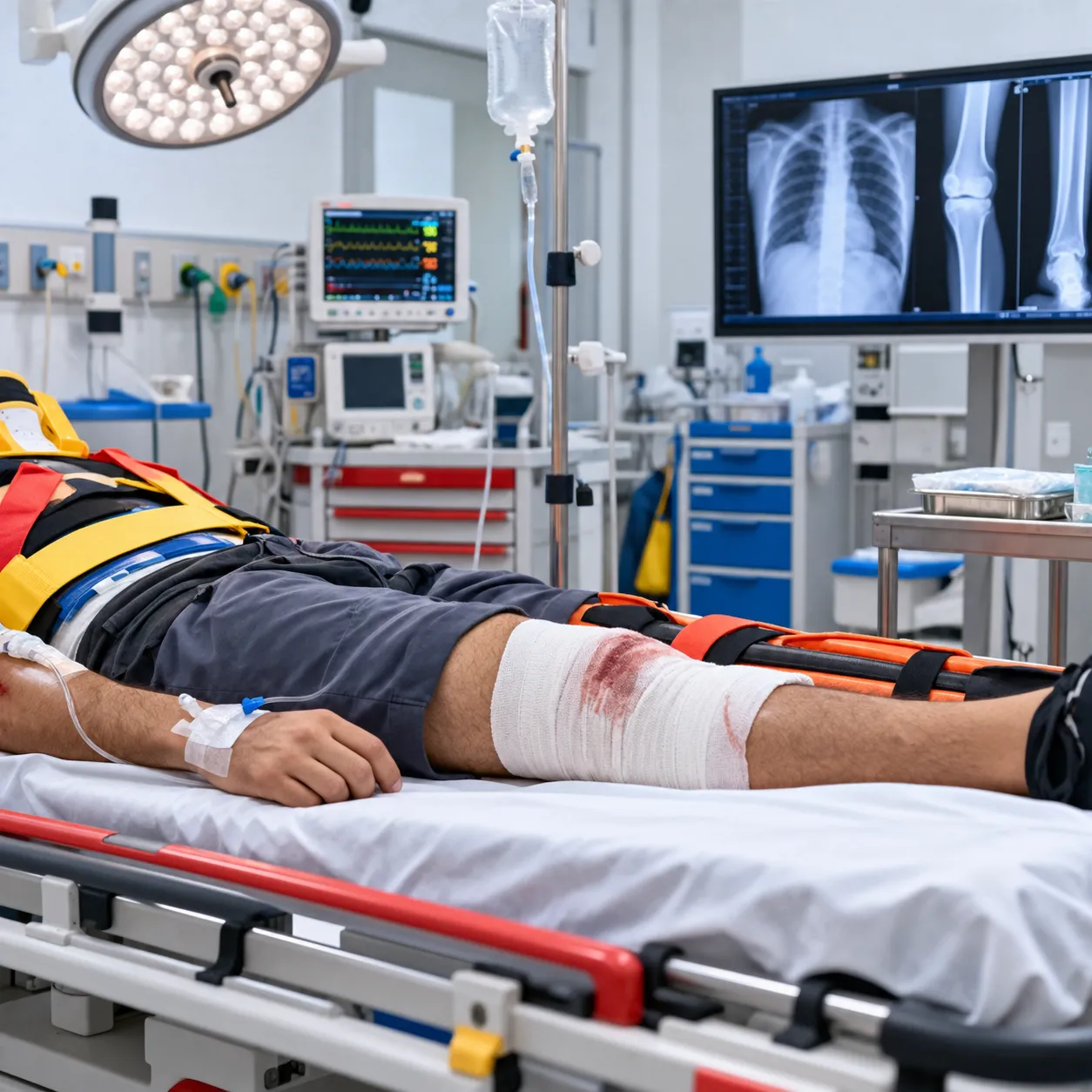
A road accident patient may have a fracture requiring orthopaedic care alongside a head, chest, abdominal, or soft-tissue injury. This is why hospital-based trauma assessment can be valuable in significant accidents.
The first clinical priority is to identify and manage immediate threats. Once the patient is stabilised, more detailed evaluation can follow.
Imaging Is Selected According to the Injury
Families sometimes assume that every accident patient needs a full-body scan. Others underestimate the need for imaging because the patient can still speak or walk.
Neither assumption is reliable.
Doctors select X-rays, CT scans, sonography, or other investigations according to the mechanism of injury, examination findings, symptoms, and clinical risk.
The goal is to obtain the information necessary for safe treatment without treating tests as a substitute for clinical assessment.
What Information Should Accompany the Patient?
When possible, family members should provide details about how the injury occurred.
Useful information includes whether the patient lost consciousness, whether a vehicle was involved, approximate height of a fall, known medical conditions, regular medications, allergies, and whether blood-thinning medicines are being used.
These details can influence assessment.
When Transport Requires Extra Care
After a major accident, unnecessary movement may worsen certain injuries. If a spinal injury is suspected or the patient has severe pain, altered consciousness, or significant trauma, appropriate emergency transport may be safer than placing the person in an unsuitable vehicle.
For people in Manjari and nearby eastern Pune localities, knowing the route to an appropriate hospital before an emergency occurs can reduce confusion when minutes matter.
Shivam Multispeciality Hospital provides multispeciality hospital care for patients in the Pune region, where trauma cases can be evaluated according to the nature and severity of their injuries.
Trauma Care Does Not End With Initial Stabilisation
After the immediate danger has been addressed, some patients require surgery, observation, wound management, fracture care, rehabilitation, or follow-up.
A good trauma pathway therefore considers both the first hours after injury and the patient's subsequent recovery needs.
The safest approach after significant trauma is to avoid assuming that an injury is minor based only on appearance. Timely assessment can identify hidden problems, establish the extent of injury, and guide the appropriate next stage of care.
Keywords