Choosing a COVID test depends on why you need it, when symptoms or exposure occurred, and whether an organisation will accept the result. By comparing molecular, antigen, antibody and respiratory-virus tests, you can select the right sample, avoid misleading negatives and confirm the practical details before visiting a testing centre.
Key takeaways
- Use RT-PCR for dependable confirmation of current SARS-CoV-2 infection.
- Test immediately with symptoms; after exposure, follow the recommended testing window.
- Confirm sample type, turnaround time, identification details and report format before booking.
- Check whether travel, work or hospital admission requires RT-PCR or another test.
Which COVID test fits your situation?
Choose the test according to the question you need answered: Is SARS-CoV-2 present now, was there a past immune response, or is another respiratory infection causing symptoms?
| Option | What it detects | When it fits |
|---|---|---|
| RT-PCR | SARS-CoV-2 genetic material using molecular amplification | Symptoms, recent exposure, hospital admission, surgery, travel or work documentation |
| Rapid antigen | Higher amounts of current SARS-CoV-2 protein | A quick decision when symptoms or contagiousness are the immediate concern |
| Antibody test | Immune antibodies in blood | Evidence of past infection or vaccination; not a reliable test for active COVID-19 |
| Respiratory-virus panel | SARS-CoV-2 plus viruses such as influenza A/B and RSV | Fever, cough or breathing symptoms when identifying the cause could change treatment |
RT-PCR is more analytically sensitive than antigen testing, but laboratory processing takes longer. A negative antigen result is less reassuring when symptoms or a significant exposure exist; ask whether to repeat it or obtain molecular testing. Antibody results do not confirm that you are safe to infect others.
For an rt pcr test in fursungi, confirm the specimen type, authorised laboratory, estimated reporting time and total price. Ask for a report showing your name, collection time, method and result. If an airline, employer or hospital specifies a method, follow that requirement rather than choosing the fastest test.
Breathing difficulty, chest pressure, new confusion or bluish lips require urgent care, not a wait for test results.
When should you test after symptoms or exposure?
A test taken immediately after exposure can miss infection because the virus has not reached detectable levels. If you have symptoms, test when they begin; if the result is negative but symptoms continue, repeat an antigen test 48 hours later or obtain a molecular test.
After a significant exposure without symptoms, testing around day 5 is more informative than testing the next morning.
RT-PCR is more sensitive than a rapid antigen test, but an early RT-PCR can still be negative. A poorly collected or mishandled swab can also produce a false negative. Until infection is less likely, follow local precautions and avoid close contact with high-risk people.
Before testing, tell the clinician or collection centre:
- The date your symptoms started, or the date of your last exposure
- Any previous positive COVID test and its date
- Current treatment, including antiviral medicines
- Whether the result is needed for travel, work, hospital admission, surgery or another specific purpose
A negative rapid test does not automatically end precautions when symptoms or exposure history strongly suggest COVID-19. Repeat testing according to current public-health advice or ask for molecular testing. A negative RT-PCR also needs clinical interpretation if taken too early or if symptoms worsen.
An invalid result is not a negative result. Ask the laboratory whether the specimen failed quality or processing checks, then arrange a new sample promptly. If you are booking an RT-PCR swab test in Fursungi, give the collection time and prior results so the clinician can decide whether retesting is useful.
What swab or sample will be collected, and how does it feel?
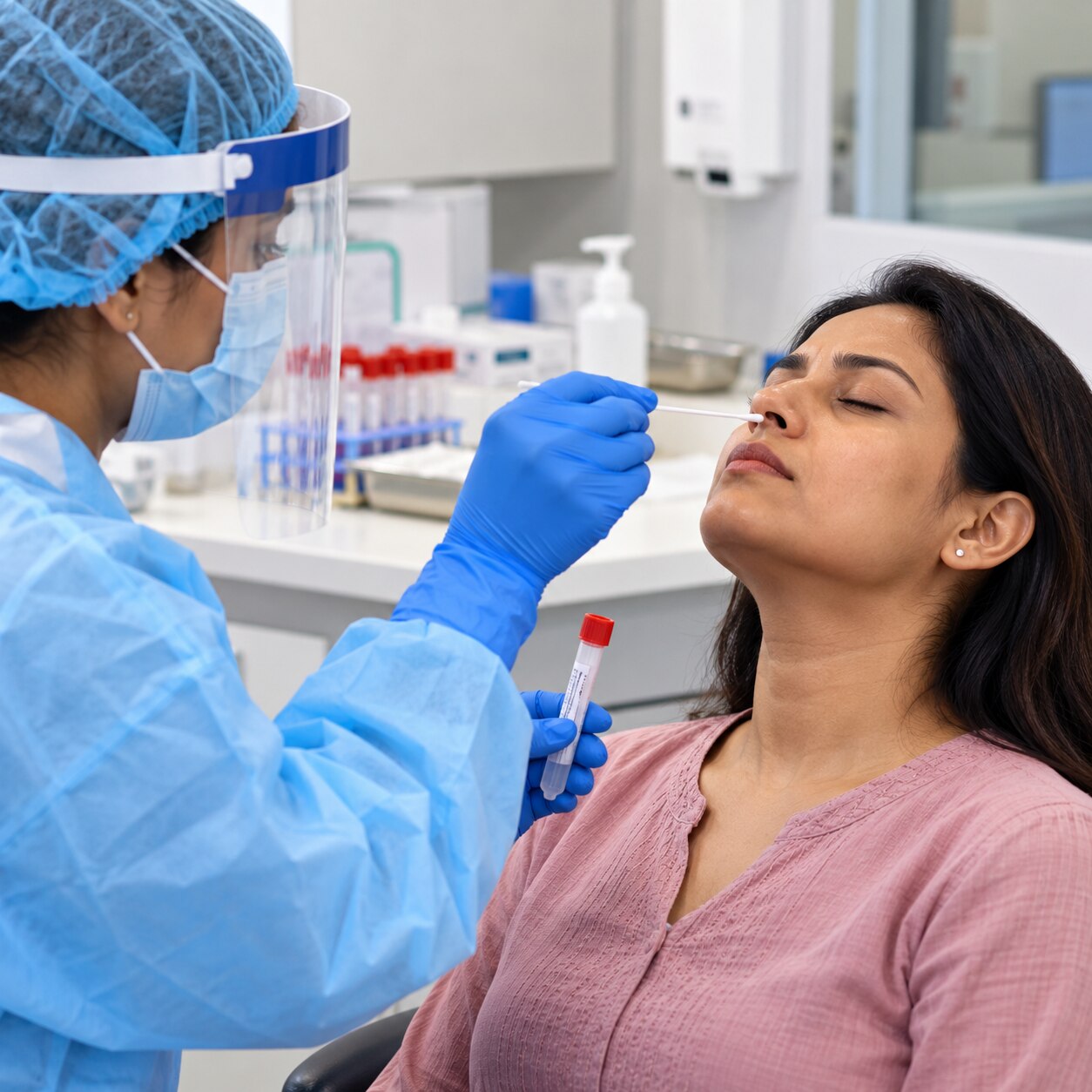
The sample affects comfort and accuracy. A trained collector should use the laboratory-specified swab and transport medium; a shallow or poorly handled sample can reduce detection or be rejected.
| Sample | Collection and preparation | Feel and reliability |
|---|---|---|
| Nasal | A swab enters the front of each nostril. Follow the centre’s instructions about sprays or rinsing before collection. | Usually causes brief pressure or tearing. It is easier to tolerate, but a superficial sample can miss virus. |
| Nasopharyngeal | A thin swab passes farther along the nasal passage to the nasopharynx, then goes into transport medium. Do not pull away during collection. | Feels sharp, watery and uncomfortable for seconds. Correct technique often provides a strong upper-airway specimen for molecular testing. |
| Throat | The collector swabs the tonsils and back of the throat without touching the tongue. Avoid eating or drinking beforehand if the laboratory instructs you to. | Gagging is common. It is less suitable when the throat is not shedding virus. |
| Saliva | You spit into a sterile tube, usually without food, drink, smoking or chewing gum for the period the laboratory specifies. | Painless, but bubbles, mucus or too little fluid can make the specimen unsuitable. Performance varies by assay and collection quality. |
| Sputum | You cough mucus from deep in the chest into a sterile container; saliva alone is not sputum. | It can be unpleasant and is difficult for people with a dry cough. It may help when infection involves the lower airways, but it is not interchangeable with a routine swab. |
Before booking a covid swab test pune, ask which specimen the laboratory accepts and whether the report identifies it.
What should you verify before booking a Fursungi test?
A booking page proves little until you confirm who collects the specimen, where it is processed and when the result clock starts. Before paying a COVID testing centre near Fursungi, ask for written answers rather than relying on an “RT-PCR available” label.
1. Check the exact address, map pin, parking or home-collection area, and collection hours. Ask whether walk-ins are accepted, whether an appointment is required, and what happens if you arrive late.
2. Confirm the specimen: nasal, nasopharyngeal, throat, saliva or sputum. Ask whether trained staff will collect it with the laboratory-specified swab and transport medium.
3. Request the processing laboratory’s legal name and authorisation or accreditation details, then verify them through the relevant official directory or the laboratory itself. A collection centre and testing laboratory may be different organisations.
4. Ask when the turnaround period begins. “24 hours” should mean from specimen collection or laboratory accession, not from booking; transport, repeat testing, an unsuitable sample, high volume or identity checks can delay reporting.
5. Get the total price in writing, including collection, home visit, taxes, report delivery and any urgent-report fee. Confirm the identity documents required and that the report will show your name, collection time, test method and result.
For an RT-PCR pathology test in Pune, Shivam Hospital M-08042754125 can clarify whether your sample is processed on site or sent elsewhere, and what collection-to-report time it quotes. Tell the centre your symptom-onset date, exposure, previous positive result and reason for testing before collection.
Related product
Pathology ₹2000 The COVID-19 real-time reverse transcription-polymerase chain reaction (RT-PCR) tests the upper and lower respiratory specimens such as swabs,... View product → |
What must the report prove for travel, work or hospital care?
A report is acceptable only when it matches the requesting institution’s rule. Ask the employer, airline, hospital or surgeon for the accepted test type, specimen, collection window and latest submission time before booking. A COVID test is not automatically required for every admission, operation or appointment.
A search for an “rt pcr pathology test pune” is not enough. Confirm that the report will show:
- Your name exactly as on your identity document
- Specimen type, such as nasal or nasopharyngeal swab
- Collection date and time
- Test method and result, such as RT-PCR: detected or not detected
- Laboratory name, authorisation details and report or accession number
- The promised reporting time and how the report will be delivered
| Test | What it demonstrates | Confirm before submission |
|---|---|---|
| RT-PCR | SARS-CoV-2 RNA detected or not detected | Whether the institution accepts RT-PCR and how recent collection must be |
| Rapid antigen | SARS-CoV-2 antigen detected or not detected | Whether a rapid result is valid for that airline, workplace or hospital |
| Antibody | Antibodies from previous infection or vaccination | Do not submit it as proof of current infection status unless explicitly requested |
Treat turnaround time as an estimate from collection or specimen accession, not from booking. Transport to a central laboratory, repeat analysis, an invalid sample or identity verification can delay release.
Tell the collecting clinician your symptom-onset date, exposure date, previous positive result and current treatment. A positive PCR detects RNA but does not prove that you remain infectious. If you have breathing difficulty, chest pressure, confusion or blue-grey lips, seek urgent care instead of waiting for the report.
Frequently asked questions
Which COVID test fits your situation?
Use RT-PCR to confirm current SARS-CoV-2 infection, an antigen test for a faster result, and antibody testing to assess past immune response. Ask a clinician about tests for influenza or other respiratory infections when symptoms do not match COVID-19.
When should you test after symptoms or exposure?
Test when symptoms begin. After exposure without symptoms, follow current public-health guidance on timing and repeat testing if the first result is negative but symptoms develop.
What swab or sample will be collected, and how does it feel?
A trained collector may take a nasal or throat swab, depending on the laboratory method. The collection can cause brief pressure, watering eyes, sneezing or discomfort, but it should not cause prolonged pain.
What should you verify before booking a Fursungi test?
Confirm the test name, sample type, collection location, identification documents, turnaround time, report delivery method and whether the centre accepts home collection or walk-ins.
What must the report prove for travel, work or hospital care?
Check the receiving organisation's rules before testing. The report may need your full name, age or date of birth, sample collection time, test method, result, laboratory details and an authorised signature or verification code.
Keywords