Medical imaging helps doctors examine structures that cannot be assessed fully through physical examination alone. X-rays, ultrasound and CT scans each serve different purposes, and the most advanced test is not automatically the most appropriate one.
Patients from Kunjir Wadi can make better decisions by understanding why an imaging test has been recommended, how to prepare and what information the radiologist needs.
How Common Imaging Tests Differ
An X-ray is commonly used to examine bones, joints and certain chest conditions. It is quick and widely available but cannot show every type of tissue clearly.
Ultrasound uses sound waves and does not involve ionising radiation. It may be used to assess abdominal organs, pregnancy, soft tissues and blood flow, depending on the study.
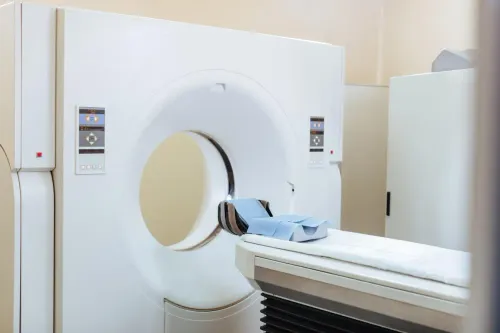
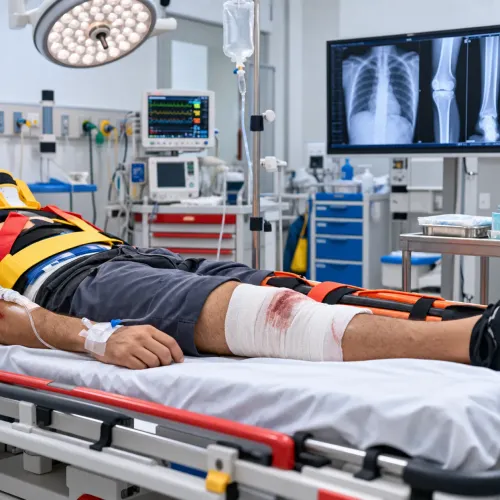
A CT scan uses X-rays and computer processing to create detailed cross-sectional images. It can be helpful in trauma, suspected internal bleeding, stroke assessment, complex fractures, chest or abdominal conditions and several other clinical situations.
The referring doctor selects a test according to the suspected condition rather than convenience alone.
Questions to Ask Before a CT Scan
Patients should clarify:
- Which body part will be scanned?
- Is contrast material required?
- Is fasting necessary?
- How long will the procedure take?
- Are recent kidney-function reports needed?
- Should previous scans be brought?
- When will the report be available?
- Who will explain the findings?
The imaging centre should receive an accurate clinical history. “Abdominal pain” alone may not provide enough context; its location, duration and associated symptoms can help the radiologist interpret the scan appropriately.
Contrast Safety
Some CT examinations use contrast material to improve visualisation. Before receiving contrast, patients should inform staff about:
- Previous contrast reactions
- Kidney disease
- Diabetes
- Thyroid conditions
- Pregnancy or possible pregnancy
- Breastfeeding
- Asthma or significant allergies
- Current medications
A previous reaction does not always mean contrast can never be used, but it requires assessment and planning. Patients should not conceal relevant history because they fear the scan may be postponed.
Radiation Awareness
CT imaging can provide valuable and sometimes urgent information, but it involves more radiation than a standard X-ray. The clinical benefit should justify the exposure.
Patients should avoid refusing a necessary emergency scan solely because radiation is involved. At the same time, they should bring previous reports so that unnecessary duplication can be avoided.
Special consideration is important for children and pregnant patients. Imaging protocols should be selected according to clinical need.
Assessing a Radiology Provider
A dependable radiology service should have:
- Appropriate imaging equipment
- Trained technical staff
- Radiologist reporting
- Patient-identification checks
- Screening for pregnancy and contrast risks
- Emergency-response arrangements
- Clear preparation instructions
- Secure access to images and reports
- A process for urgent-result communication
In trauma and critical illness, hospital-based imaging can reduce delays because emergency doctors and specialists can act on findings within the same care setting.
After the Scan
Most non-contrast scans require little aftercare. Following contrast administration, patients should observe the instructions given by the radiology team.
Immediate help is required if there is breathing difficulty, facial swelling, widespread rash or another severe reaction. Patients with delayed concerns should contact the imaging provider or treating doctor.
The radiology report should be reviewed by the clinician who ordered the scan. Image findings must be interpreted in the context of symptoms and examination results.
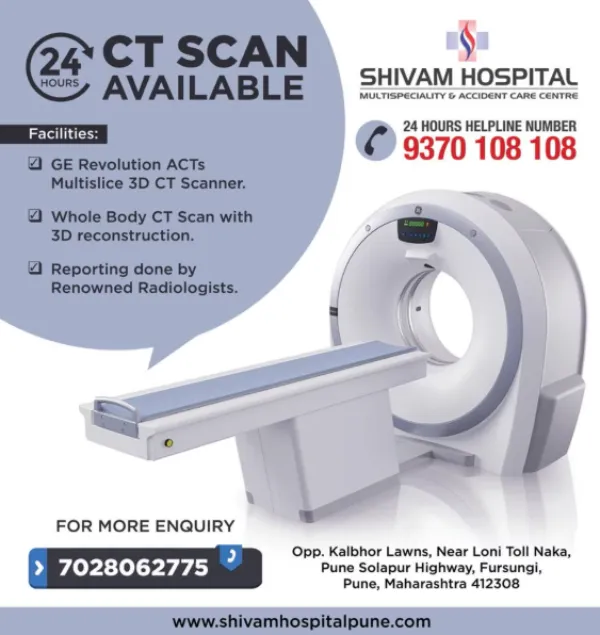
Shivam Multispeciality Hospital lists multislice 3D CT scanning, ultrasonography, colour Doppler and digital X-ray services. Its proximity to the Pune Solapur Highway may provide a practical diagnostic option for patients from Kunjir Wadi.
Choosing CT scan and radiology services should involve clinical appropriateness, patient safety, reporting quality and access to follow-up care not price alone.
Keywords